Performance Gallery
This collection presents visual documentation of Julian Eltinge's stage career — from early Boston appearances at the Tremont Theater to his celebrated Broadway farces and European vaudeville tours. Each image captures a moment from one of the most remarkable careers in early American theater.
Early Vaudeville, circa 1905
Eltinge during his B. F. Keith's Theater specialty run, Boston.
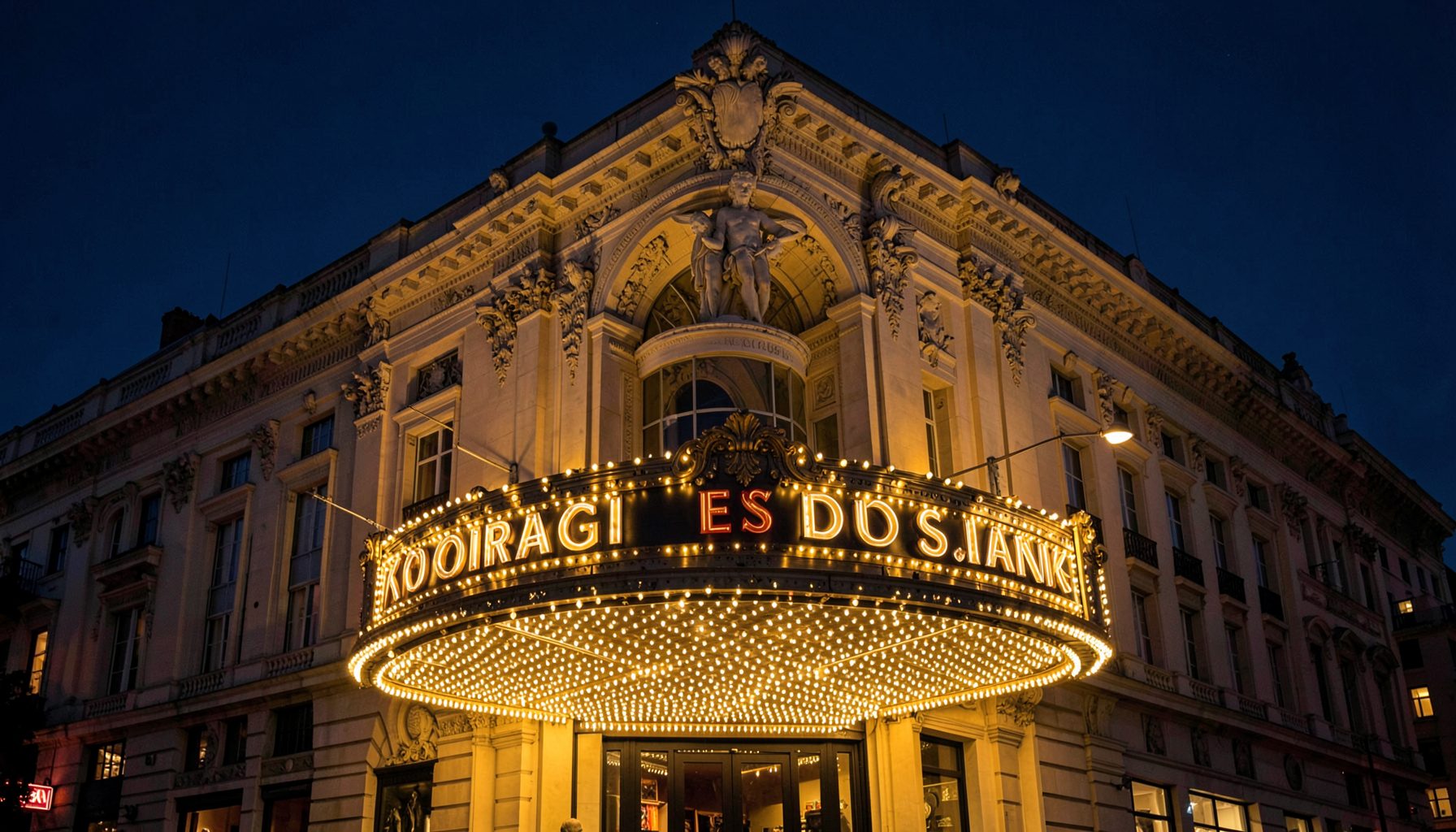
Palace Theater, London, 1906
Eltinge made his London theatre debut at the Palace Theater during his European tour.
The Fascinating Widow, 1910–1911
Premiered in Atlantic City, N.J. on November 14, 1910, before opening at the Liberty Theater, New York.
The Crinoline Girl, 1914
Premiered March 16, 1914 at the Knickerbocker Theater, New York.
Cousin Lucy, 1915
Premiered August 27, 1915 at the Cohan Theater.
European Vaudeville Tour, 1905–1907
Eltinge toured continental Europe, culminating in a Royal Command Performance at Windsor Castle in 1907.
The photographs gathered in this gallery offer a window into the distinctive world of early twentieth-century American theater, where spectacle and artistry converged on stages across the country and abroad. Each image preserves a fleeting moment of performance, capturing the elaborate costumes, expressive staging, and theatrical conventions that defined the era. For historians, these pictures serve as invaluable primary sources, documenting not only a celebrated career but also the broader cultural landscape of vaudeville and musical comedy during its golden age. The visual record allows contemporary audiences to appreciate the craftsmanship and showmanship that drew packed houses night after night.
Beyond their historical value, these images illuminate the technical and aesthetic evolution of theatrical photography itself. From posed studio portraits to candid backstage shots, the collection charts changing styles in lighting, composition, and print reproduction over the course of roughly two decades. The costumes featured reflect the opulent design sensibilities of the period, with elaborate beadwork, tailored silhouettes, and dramatic accessories that translated effectively to the footlights. Together, the photographs reveal how performers crafted their public personas through careful attention to every visual detail, from makeup to posture, creating memorable stage identities that resonated with diverse audiences across continents.
For visitors interested in theater history, this gallery offers a starting point for exploring the broader world of American popular entertainment in the early 1900s. The images connect to a larger story of touring circuits, theatrical syndicates, and the rise of mass entertainment that transformed how audiences experienced live performance. They also invite reflection on how gender presentation, humor, and audience expectations operated within the conventions of the time. As a visual archive, the collection preserves an important chapter of cultural history, ensuring that the artistry and energy of these performances remain accessible to students, researchers, and theater enthusiasts for generations to come.